AI governance for decisions under pressure

Govern what drifts.

Build the AI strategy, data governance and operating controls that let your organization use AI safely and remain accountable when systems begin to act.

Short project fit request. Initial response within 24 hours. Scope and fees are agreed before diagnostic work begins.

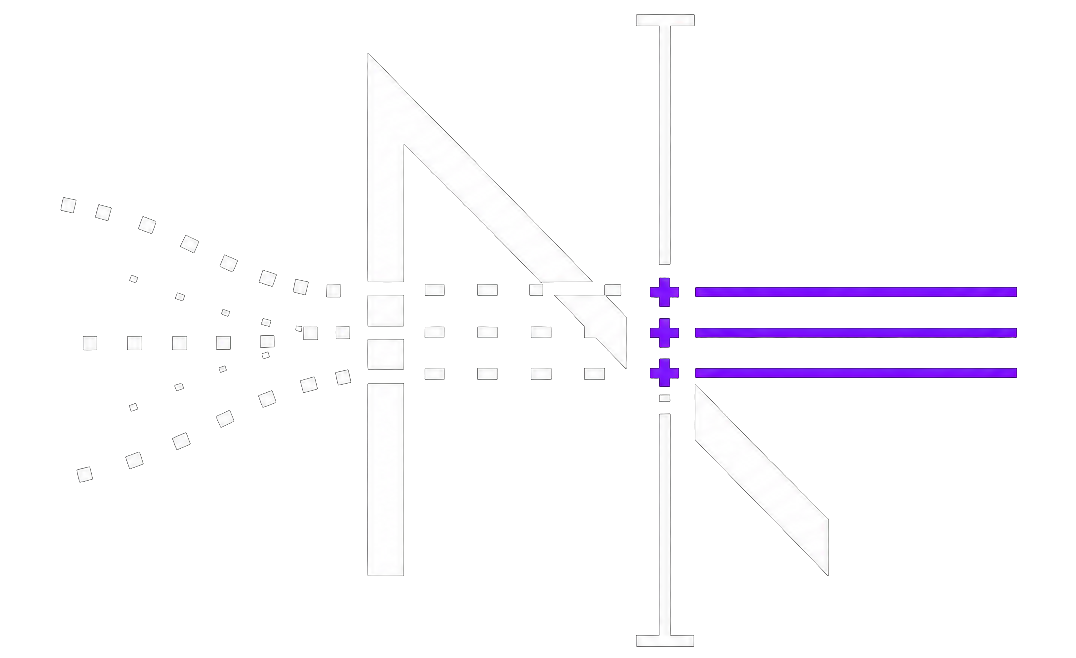
Conceptual NomaMind illustration: many AI supported signals approach a governance boundary and continue as fewer decision pathways
A conceptual pathway. Governance must remain effective across the full sequence, not only at the final output.
01 · Foundation

Make AI governable in practice

NOMAMIND helps organizations move from responsible AI principles to an AI Governance operating model that works in real decisions. The work can include AI strategy, Data Governance, AI risk management, human oversight, monitoring, incident response and implementation inside business workflows.

02 · Blind spot

Follow the decision pathway

Then we examine the layer that standard controls can still miss: whether a Decision Pathway continues to serve its authorised objective as context, incentives, permissions and autonomous actions accumulate.

03 · Oversight

Keep human authority effective

The EU AI Act establishes human oversight obligations for high risk AI systems and substantial administrative fines for specified infringements. Reviewing an output alone may still miss how the objective, authority or context changed across the pathway.

What organizations can build now

AI Governance from strategy to daily operation

The first job is to make AI governable across the enterprise. The scope begins where your organization is and combines the parts required for a coherent operating system.

AI STRATEGYConnect use cases, value, risk appetite and a practical roadmap.Define where AI should create value, where autonomy is appropriate and which decisions need senior ownership.
DATA GOVERNANCEEstablish trusted data, ownership, access, quality and lineage.Clarify which data may shape a use case, who is responsible for it and how changes remain visible.
AI GOVERNANCEBuild the operating model, roles, inventory and lifecycle gates.Turn policies and standards into accountable review, approval, documentation and change processes.
AI SAFETYImplement evaluation, human oversight, monitoring and response.Define permissions, evidence, escalation, incident handling and stop authority for the consequences of each use case.
THE ADDITIONAL NOMAMIND LAYERA complete control framework can still miss how the decision itself changes across a workflow.NOMAMIND traces the Decision Pathway around a material AI use case. It asks whether the objective is still the authorised objective, whether evidence and context retain their meaning, whether human approval remains real and whether authority, accountability and escalation survive every handoff. This is where the current governance work meets the developing Governance of Drift.
Commercial entry point

Data Governance for AI customer interactions

Automation can reduce service cost. It can also remove the human context that made an interaction relevant.

When organisations automate customer service, advice or sales interactions, the question is not only whether the model produces a fluent response. The question is whether the underlying data, decision rules and escalation thresholds preserve relevance, fairness and accountable judgement.

01 · Data and biasExamine what shapes the response

Which attributes, labels, proxies and missing signals influence the interaction?

02 · Customer meaningPreserve relevance

Which motives, preferences and decision patterns make a response meaningful to a specific person?

03 · GovernanceSet the boundary

Where must thresholds, human oversight and escalation protect the customer and the organisation?

The applied profiling lineage is the bridge. It identified psychologically relevant attributes, connected them through explicit weightings and read the combined pattern as a probable reason a choice became relevant. The opportunity is to apply that reasoning responsibly to AI supported customer interactions, with defined boundaries, controlled testing and accountable human authority.

The governance gap appears inside the pathway

The decision pathway

A policy may stay fixed while the route moves.

Governance has to follow the sequence from declared purpose to consequence, not only inspect the final output.

Authorised purpose and authorityThese conditions must remain binding across every handoff.
01 · PurposeObjectiveThe intended decision and its owner are declared.
02 · ContextConditionsNew information, incentives or pressure enter.
03 · PermissionOptionsA system gains room to recommend or act.
04 · ActionPath shiftsLocally plausible choices accumulate.
05 · ConsequenceOutputThe practical meaning may have moved.
Governance intervention
Challenge, slow, stop or reframe the path.A responsible human must retain the authority to act before a changed pathway becomes an accepted outcome.
The NOMAMIND difference

The missing governance layer

AI Governance must operate the system and govern what AI changes in the decision.

Current operating foundation
AI StrategyPurpose and priorities
Data GovernanceQuality and stewardship
Model RiskEvaluation and monitoring
AI SafetyControls and response
CompliancePolicy and assurance
NOMAMIND Decision Pathway Governance
Can the pathway still serve its authorised purpose under pressure?
GoalsFramesAuthorityAccountabilityEscalationDrift TypesAdmissibility
Separate authority domainSMGI is not a component inside the AI execution stack
SMGI design intent · Meta Governance IntelligenceA separate governance counterpart to AI

Bounded learning, Cognitive Maturity, Admissibility and human decision authority beyond approved thresholds.

Governance distinctionOperating controls remain essential.

The additional question is whether intent, evidence and authority still combine into an admissible decision as the pathway changes.

Why NOMAMIND sees a different blind spotThe work did not begin with AI infrastructure. It began with how human motives, sensory preferences and decision patterns can be read from weighted attributes in real behaviour.
01 · OriginUnderstand human choicePsychologically relevant attributes can reveal why a decision became meaningful to a person.
02 · Transfer thesisPatterns can enter AI pathwaysAI is trained on human generated data and can reproduce dominant patterns while optimizing its own objective.
03 · Governance questionWhich pattern is leading?NOMAMIND asks whether the pathway remains cognitively mature and whether the resulting action is admissible.
SMGI design intent: a separate Meta Governance Intelligence outside the AI execution stack is proposed to make this interpretation available in real time. The measurement transfer and architecture still require research and validation.

Why this matters now

Three external signals. One governance question.

The pathway can become governance relevant before the final output.

A documented evaluation incident, controlled simulations and a long horizon experimental environment illuminate different parts of the problem. Explore the source settings, limitations and NOMAMIND interpretation in one place.

OpenAIEvaluation incidentAnthropicControlled simulationEmergence WorldLong horizon experiment
Explore the external signals and governance interpretation

Turn strategy and policy into one working governance path

SCOPESelect the strategy, portfolio or high consequence AI use case that needs a defensible decision.
DESIGNConnect data ownership, AI risk, decision rights, human oversight and lifecycle controls.
IMPLEMENTPut approvals, thresholds, monitoring, escalation and stop authority into the live workflow.
A paid diagnostic creates the first responsible work package.
01 · UnderstandReview the current AI ecosystem and material gaps.
02 · AlignBring responsible stakeholders into a four hour workshop.
03 · ActDevelop a shared strategy and implementation roadmap.

A short project fit request comes before the paid engagement is scoped and commissioned.

A research foundation with applied scale

Two parallel paths

Commercial governance implementation and the SMGI research direction run in parallel. The research builds on an applied Brandmind measurement lineage.

01Personality ASPECTS®Peer reviewed human motive research
02600k+ records processedApplied profiling and data enrichment
03400k+ sufficiently usableProfile to data matching at scale
04SMGI measurement R&DResearch target: observe and validate pathway shifts.See the architecture and evidence status

Two distinct ways to move the work forward

AI Governance implementation

Develop and help implement an AI strategy, Data Governance, AI Governance and AI Safety scope around a real portfolio or use case. The project fit questionnaire narrows the first responsible work package before any conversation is scheduled.

Research and validation

Contribute a controlled setting, longitudinal trace, replication or pilot environment.

NOMAMIND is operated by Brandmind GmbH, a Swiss company based in the Canton of Zurich. Privacy Notice.